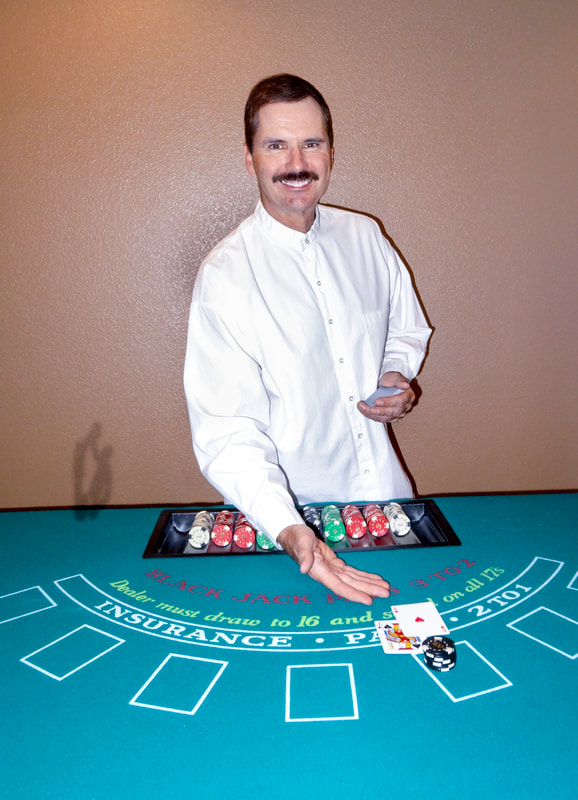
 …But not all was well. My girlfriend and I were running out of money and we started planning to move back to the Midwest. Neither of us had been to California and it was only four hours from Vegas. We figured we would take a trip there and then start moving back home. There is a place in Hollywood, CA, called The Magic Castle where many of the best magicians perform. It was a Victorian Mansion built in 1902 and converted to the Magic Castle in the 1960s. I wanted to go, but there was a problem: You had to be a member; I was not. I called CC and asked him if he had heard of the Magic Castle. He laughed and said, “I have been there several times”. I told him I was going this weekend. He replied, “I will be in LA this weekend and we can go.” Perfect. I remembered driving up the steep road to the top where the Magic Castle was illuminated against the pitch black sky. Men were in suits and ties; women in evening gowns. I walked into a little 20 x 20 room with no other entrances or exits and I thought to myself: What’s going on? The receptionist told me to stand in front of the bookcase and say: Open Sesame, and just like you have seen in the movies the bookcase swung open into the Magic Castle. Adorned on all the walls were paintings and photos of the masters of yesteryear. In one room there is a piano with no pianist that magically plays any song requested. There are four showrooms where the country’s best magicians perform. Unknown to me until several years later my girlfriend cuts into CC that night and told him of our predicament: We were running out of money and moving back to the Midwest. The day after we returned to Vegas, CC called me and told me to come over. He taught me to deal the game of Blackjack in two days; on the third day I was employed as a Blackjack dealer in a downtown Vegas casino. Back in those days I was literally dealing the game six hours a day. For six hours I was practicing moves at the table. I didn’t have an agent play at my game; I was only practicing. I had a Blackjack table at my house and I would videotape myself practicing. I played the video and watched myself doing the moves on TV. When I couldn’t spot the move, I knew I was ready. Seven weeks later I got a job on the Las Vegas Strip dealing Blackjack. I had my first agent come in and we took off the game. I was primarily stacking the deck. We won without any heat. This gave me tremendous confidence. A few months later CC called. He was forming a cheating team and asked if I wanted in. I was at his house before he hung up the phone! He was dealing to four players and told me to watch and see if I could nail the move. I watched, but couldn’t see the move. What was he doing? He was doing a fairly sophisticated form of the flash. The standard flash was done by neck tying the deck and then flashing the top card of the deck. This seemed very risky. This new method occurred as the dealer tucked his hole card. He would flash the top card of the deck to his agent at first base. This gave the agent 100% playing efficiency with his first hit card. He would never bust with this card, he knew when to double down, and he could hit his stiffs with a dealer’s 2 - 6 up. It got even better: as JS picked up the cards he flashed the top card of the deck to his agent. This gave his agent a very high betting efficiency. He would bet low when he saw a baby or rag; medium when he saw a 10 value card and the table limit when he saw an Ace. This play took place out of town for two reasons: CC was too hot to get a play down in Vegas and the architect of the play was a shift boss who worked at an out of town casino. He cut into me and told me he would not hire me. He explained that he did not want any connection between us. I would have to get hired by the casino manager (CM) on my own. I travelled to that casino and auditioned. After the audition, the CM told me there were no openings. I auditioned again the following week and was told the same thing. I called JS and told him I was having trouble getting hired. He told me I had to get hired if I wanted to be part of the team. I was determined to do whatever it took. I went back and got another audition. As the CM told me he did not have any openings again, I replied, “I’m broke, hungry and I need a job. I will work one day a week.” He hired me! I will never forget walking into the pit, looking around and thinking: That dealer is down with it, there’s one of our agents, there’s our boss… In my next article I will tell you how play went down, who got pulled up by Gaming Control Agents, and what I did when I returned to Vegas.
2 Comments
 IMO, one of the best blackjack cheating moves is/was stacking a double down hand from a new deck.
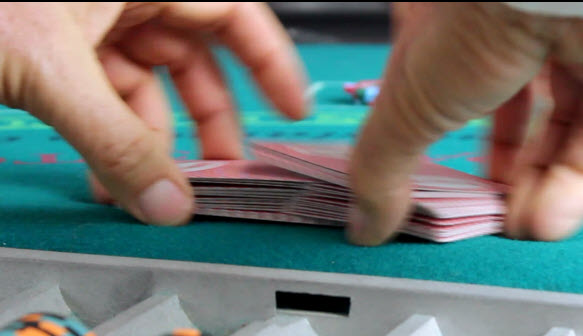
Here's why: First, it is a 100% winner. Second, the agent wins twice as much as his/her original bet. To eliminate confusion the agent bets $1,000 then double downs for another $1,000. Instead of winning $1,000 total; he wins $2000. Third, the play is psychologically perfect. The agent makes it appear this is a one-time shot, which in reality it is. The agent stands, he never sits down. He plays cash. He appears aggravated that he feels compelled to double down. This act convinces the casino employees this player is taking a one time shot. Fourth, the move is psychologically perfect. In the old days the boss would open games at the start of Swing shift. He would count down the rack, give the dealer a new deck(s) and move to the next table. This was the perfect time for the dealer to stack the double down hand for his agent. Obviously the boss was not watching and neither was the eye in the sky, because there were no players at the game. Fifth: The heat will be minimal. The casino believes the player took a shot. The win is not big compared to a cooler and it is much easier to do and less risky. In the old days when games were opened dealers did not "wash" the cards. They were told to give the deck several shuffles. It was during these shuffles that the stack was created. When my agent came to the table I simply retained the stack during the shuffle and marked the place my agent would cut the deck. The rest was all acting. Historical Note: I came up with this idea and did it under fire. Others might have done this before I did, but I had never heard of anyone doing this. Read the article in the December 2015 issue about Dustin Marks.  Check out a new video about hand mucking: Click to view. Hand mucking is secretly playing the best two out of three cards. The cheater has an extra card on him and switches it with one of the cards he is dealt. It's hard to explain in print. Watch the video to gain an insight into one of the most skillful moves a cheat can perform. My new book should be available this autumn (2015). Stay tuned for more details.  To Your Success,
Dustin It might seen strange a retired Blackjack Cheat would write about success principles. The reason I was a successful Blackjack Cheat was I followed these principles! I will write about each principle in general terms here and in future blogs explain how I used these principles specifically to cheat the game of Blackjack. These principles are universal. You can use them to achieve any goal that is important to you.
 To Your Success,
Dustin |
AuthorAuthor of Cheating at Blackjack, Cheating at Blackjack Squared, and Cheating at Blackjack: The Real Work. Archives
August 2023
Categories |
 RSS Feed