 Watch the podcast about this play Dustin swore off dice plays after his first one went badly. Then someone said one name, and he changed his mind. That name was Bones — and the story of what happened next is less about a dice play than about what happens when reputation convinces smart people to ignore every warning sign in front of them. THE NAME THAT CHANGED HIS MIND Bones was already in his seventies by the time Dustin met him, but his reputation as a dice mechanic hadn't faded. Two meetings went nowhere — Bones simply didn't take to Dustin. What finally got Dustin onto the team wasn't skill or charm. It was a camcorder. Bones wanted to see his own switch on video, to make sure age hadn't cost him the move. Dustin had one, and knew how to use it. That was what got Dustin on the team.  THE MOVE ITSELF The play centered on switching in dice that could never roll a seven. A seven only comes from combinations involving an odd number — one, three, or five. Kick in both dice with nothing but even numbers, and a seven becomes mathematically impossible. The tell, if anyone looked closely enough over time, is exactly that: dice with no odd numbers on them at all. How odd 😊 A CREW TOO BIG TO TRUST The team grew into a fourteen-player operation, plus Bones, plus casino staff believed to be down with the play. Several recruits barely knew how to play craps, so Dustin's role expanded again: teaching newcomers enough of the game that they wouldn't stand out under fire. Bones' own grandson became a liability, what a surprise, an entitled idiot.  THE RED FLAGS NOBODY ACTED ON The warning signs piled up fast. The story about which casino bosses were actually down with the play kept changing — first the whole stick crew was in on it, then that crew quit, then a new crew was simply told by a boss not to turn the dice, with no real explanation why. Shills who'd been told to bet small couldn't resist betting bigger once they saw they couldn't lose. The shills would keep their winnings. And with that much guaranteed money on the table, players started quietly inviting friends onto a team that was already too large — a practice known as backdooring a play. Every one of these should have ended the play. None of them did. HOW THE SWITCH ACTUALLY WORKED Offered a handful of dice to choose from, Bones would select two — then, through a ritual that looked like nothing more than a shooter's superstition, switch in a matched pair that could never seven out. The real dice dropped into a bag on the table's rail, flanked by teammates, often a woman whose purse gave the switch cover. After roughly twenty minutes winning, Bones would repeat the same switch — switching the gaff dice out for real ones, and the rest of the rolls were up to luck. The gaff dice left the casino in that same purse, long before anyone thought to search him. THE NIGHT IT ALMOST HAPPENED After delay after delay, the play finally had a night. Early arrivals sensed something was wrong before anyone else did and they called Bones. Bones made one call to a contact with ties to Gaming Control. The answer came back fast: the casino floor was full of Gaming Control agents — and the FBI. The team never set foot inside.  THE REASON WHY The explanation surfaced later. A shift boss connected to the play had already been popped in an unrelated matter months earlier — and had offered authorities something bigger than himself in exchange for leniency: Bones. THE REAL LESSON Looking back, Dustin doesn't point to any single mistake. He points to how many mistakes he was willing to overlook simply because of who Bones was. Legendary skill in one area doesn't guarantee good judgment in another — and the harder someone is to question, the more that's exactly the moment worth questioning them. MORE FROM THIS WORLD Watch the podcast WANT MORE STORIES LIKE THIS? Subscribe to Cheating at Blackjack on YouTube, or check out my other ebooks at dustinmarks.com.
0 Comments
 People ask me this constantly — on the podcast, at speaking events, in emails from strangers who found one of my books. Four years cheating blackjack in Las Vegas casinos, hundreds of plays, and I walked away clean. Never got popped, not one close call that ended badly. The honest answer it was seven habits I practiced without exception, for four straight years — plus one thing I didn't control at all. I WASN'T GREEDY The math of cheating only works if you let it. A big score feels good once. A pattern of big scores draws heat — by pit bosses, by surveillance, by the guy at the next table who mentions it to the wrong person later. I kept plays modest and spread out, except for the computer coolers. Slow, steady money doesn't draw the same attention as one big score. NO EGO This one's harder than it sounds. Once you get good at something dangerous, there's a real desire to prove it — to anyone that will listen. Ego gets people caught. I never needed anyone to know how good I was. The only person who needed to know was me.  I LISTENED TO PEOPLE WHO KNEW MORE THAN ME Everything I knew, I learned from someone who knew more than me. When my mentor showed me a technique, I didn't try to improve it on day one — I did it exactly as taught, for a long time, before I ever changed a thing. A lot of people get caught trying to skip that step. Never outshine the master. 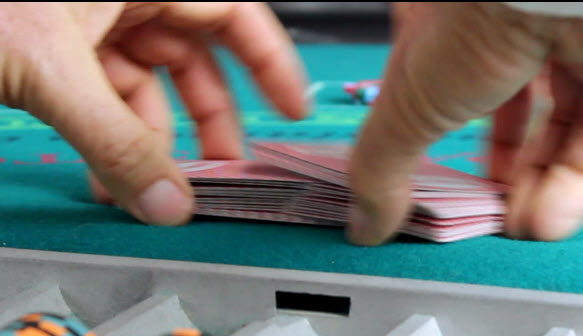 I PRACTICED CONSTANTLY Every move I did at the table, I'd already done thousands of times in front of a mirror. Flashing, stacking, a false shuffle — none of it works under real fire unless you know it cold, without thinking about it. If you're still thinking about the mechanics while you're doing it under fire, you've already lost. I NEVER STOPPED TRYING TO MAKE THE MOVES BETTER The moves I did towards the end were more deceptive than when I first did them. Even moves that were already working well got small refinements. The moment you decide a move is perfect you stop trying to make it better.  THE CORRECT AGENTS
A cheat is only as good as the people working with him. I'd rather have turned down money than worked with someone I couldn't fully trust or who didn't have the discipline to hold up their end. The Kaiser and I are still telling these stories together decades later for a reason — that kind of trust doesn't happen by accident, and it doesn't happen with just anyone. I USED PSYCHOLOGY, NOT JUST SLEIGHT OF HAND The moves were only part of the play. Reading a pit boss, knowing exactly when a dealer was tired or distracted, understanding what made a floor supervisor relax instead of watch closer — that mattered as much as the moves. Most people who get caught aren't caught by the moves. They're caught because they didn't read the bosses. I GOT LUCKY I won't pretend this one isn't real. Some of it was simply the right pit boss looking the wrong way at the right time. No amount of skill or discipline erases the fact that plenty of cheats just as careful as me got caught anyway. I'd rather be honest about that than pretend four years was pure mastery. It wasn't. In my opinion, the 80s were a great time to cheat the casinos. NONE OF THIS WORKS ALONE Any one of these eight factors, by itself, wouldn't have been enough. Skill without discipline gets you caught eventually. Discipline without skill just means you never get anywhere in the first place. And even discipline and skill together still need a little luck to survive four years. That's the real answer — not a secret move, just never letting my guard down on the things I could control, and staying honest about the one thing I couldn't. WANT MORE STORIES LIKE THIS? Subscribe to the podcast Cheating at Blackjack on YouTube, or check out my other ebooks at dustinmarks.com.  Every cheat has a move they fell in love with before they fully understood the downside. For Dustin, that move was mucking — the art of secretly switching cards at the blackjack table. Decades later, breaking it down with Kaiser, the real lesson wasn't the sleight of hand. It was the myth.  THE FASCINATION STARTED WITH A BOOK
Long before Dustin ever tried mucking at a table, he read The Expert at the Card Table, then early VHS instructional tapes, picking up scattered pieces of a technique that mostly didn't make sense yet. The breakthrough came from an old-timer who actually taught him real moves — and left him with a warning Dustin never forgot: it's fun to do in front of a mirror, but you shouldn't do it under fire. Watch the mucking episode on the podcast PRACTICING ON THE PEOPLE WHO THOUGHT THEY WERE READY To test the moves on real dealers without real risk, Dustin paid his way into a dealing school — not to learn the game, but to sit across from dealers convinced they already knew everything. He mucked against them freely. Not one of them so much as flinched. It confirmed his moves worked. It didn't yet answer the bigger question. WHY MUCKING IS THE WORST BET IN CHEATING Unlike flashing or stacking the deck — moves that leave no visible trace even if someone's paying attention — a failed muck is instantly obvious. A dealer or a square seeing three cards where there should be two doesn't need special training to notice; as Dustin puts it, even grandma catches that one. And mucking is normally a solo act, which means the one person closest to the cheat — the dealer, three feet away — is also his single biggest threat, with no partner to help with misdirection. WHERE A MUCKER SITS A mucker never plays heads-up against the dealer — with no one else at the table, the dealer has nothing to watch except him. Third base, with at least three players ahead, buys cover and time. And the best distraction of all doesn't require any accomplice: an attractive player at the table who's pulling the dealer's attention somewhere else entirely, or a nervous first-timer the dealer is busy trying to walk through the rules. THE REALITY THAT KILLS THE WHOLE PLAY Here's the part that surprises: a mucker can't bet big, because a large bet draws exactly the kind of attention — from the dealer and from the pit — that a mucker can least afford. So the bets stay smaller, the win stay small, and even when the move is clean, there's no guarantee of a winning hand unless it is a blackjack. Switch in a 20, and isn't guaranteed to win. The dealer could hit out to a 21 or have a 20. THE VERDICT Dustin's own answer on whether he ever mucked under fire is a genuine no. It is too risky and the reward is too small. Fun move to do in front of mirror, but not under fire. Watch The Mucking Episode on the Podcast  Every move Dustin and The Kaiser were down with in Las Vegas worked because they knew the territory — the bosses, the casinos, the small tells that told them when it was George and when to scrub the play. Then they took their act on the road to Reno, and found out how much of their success depended on home-court advantage. GRANDMA The trip started small — literally, at a two-table casino along the drive north to Reno. The dealer they nicknamed “Grandma” turned out to be an old-time cheat who was stacking the deck against them. After a few hands, they cut their losses, tossed her a 25 cent piece, and told her to go take lessons. The were lucky they got out of that casino without being hurt. A stupid move. THE TWO CARD DROP At another small stop, Dustin sat down to test a new move — one built around an unusual way of cutting the deck that exposes his first card. Ten minutes later, Kaiser sat down at the same table, a total stranger as far as the dealer knew, and cut the deck exactly the same way. The dealer noticed immediately and asked if they knew each other. They didn't just get made — they learned a real lesson: a move only works if it looks unremarkable, and two strangers doing the same weird method of cutting the deck is opposite of unremarkable, it suspicious.  TONOPAH This is where the trip turned. Working the play for real — Dustin cutting, Kaiser reading and signaling from third base — they noticed the dealer had stopped making conversation and started staring, hard, at Dustin's hands every time he cut. Worse, Dustin was not getting the cards Kaiser was signaling. The dealer had figured out the move and was dealing seconds to ruin it. They scrubbed the play, split up — Kaiser to the car, Dustin to the cashier's cage, stalling just enough to make sure Kaiser was in the driver’s seat and ready to go. Dustin walked out past two men who didn't look like they wanted to shake hands. Once Dustin hit the front door, he took off like he was shot out of a cannon to the car. Kaiser took off and they did not look back. THE PLAN THAT SOUNDED GREAT UNTIL THEY THOUGHT IT THROUGH With the 2 card drop too hot, they considered a backup: Dustin auditions as a dealer at the blackjack table and stacks The Kaiser a blackjack. It's the kind of plan that sounds airtight at 25 years old and falls apart the moment you actually think it through — audition tables are deliberately full of players, a surprise max bet from a stranger and the dealer would get him pulled before he was allowed to deal the cards. They came to their senses before it ever got dangerous, and forty years later, they're both glad they did. WHY HOME TURF MATTERED MORE THAN THEY REALIZED Back in Las Vegas, Kaiser kept something close to an informal database — tracking which bosses worked which shifts, and how often he'd already played against each one, so he'd know when not to play at a table rather than risk of being remembered. That kind of preparation wasn't possible in Reno. They didn't know the bosses, didn't know the shift patterns, and had no read on who they were dealing with. Four days later, they left Reno winning enough to pay expenses and with a conclusion neither of them expected to reach: the skill wasn't the hard part. Knowing the terrain was. MORE FROM OUR WORLD Episode 15 -- We Took Our Blackjack Cheating System to Reno WANT MORE STORIES LIKE THIS? Subscribe to Cheating at Blackjack on YouTube, or check out my other ebooks at dustinmarks.com.  Episode 10 introduced The Kaiser. Episode 14 finally focuses on Dustin. For the first time on the podcast, Dustin sits on the other side of the interview — and the answers trace back a lot further than four years of cheating blackjack in Las Vegas. A CHILDHOOD SET IN MOTION It started with an accounting mistake. Dustin's father won a trip to Las Vegas he technically shouldn't have won, and came home with stories about Vegas and a small roulette toy for Dustin, who was 7 years old. The same year, an amateur magician performed at a family gathering — and something clicked in Dustin’s brain and his love for card magic was born. No mentor, no internet, no VHS tapes yet — just library books on card magic and, eventually, a copy of The Expert at the Card Table, the book that became his bible.  THE TEN-YEAR-OLD WHO GOT HUSTLED Around age ten, at a family friend's gathering, a mysterious older man — rumored, maybe, to be part of the mob — offered to play Gin Rummy with Dustin. Three hands. Three exact predictions: how he'd win, how fast, and the top card of the deck before it was even turned over. Dustin didn't know the method at ten years old, but he knew something had just been done to him. That single afternoon planted the question that would define the next chapter of his life.  VEGAS, $2,100, AND NO PLAN In 1983, with $2,100 to his name, no job lined up, and nobody he knew in the city, Dustin moved to Las Vegas — to find the authors of the magic books he had been reading. They lived in Vegas. It took weeks to track down Gary Darwin's Magic Club, an unadvertised weekly meeting of the city's top magicians. He walked in to the magic meeting to find Jimmy Grippo, Michael Skinner, Alan Ackerman, and Paul Harris sitting in one room. Six weeks earlier he'd been reading their books in the Midwest. Me and Jimmy Grippo.  FINDING MR. CC At those same meetings, Dustin kept hearing about one reclusive figure, referred to here only as Mr. CC — reportedly the best anyone had ever seen with a deck of cards, specializing in gambling moves. Tracking him down took months. He finally had a lead from a friend who worked at the Gambler’s Book Club. Dustin nicknamed him “Bookstore Paul.” When Paul finally called with a possible sighting of Mr. CC in the bookstore, Dustin made the twenty-minute drive in under ten. Three words changed the rest of his life: “Follow me home.” What followed was a six-hour private demonstration of card, dice, and chip moves so far ahead of casino countermeasures that Dustin understood, immediately, that these moves were light years ahead of the casinos. WHY HE WALKED AWAY Four years of cheating ended the way a lot of good runs end — not with a catastrophic bust, but with the walls closing in a little at a time. Dustin's mentor was eventually arrested elsewhere, and the FBI was later found to have surveilled his wedding, an event Dustin had attended. Guilt by association was enough. He shifted to legal card counting, before retiring completely in 1990. “I THINK I WAS BORN TO DO THIS” Asked to look back on it all, Dustin doesn't hesitate: stacking the deck under a boss's stare, fully in the zone, is still the best he's ever been at anything. It's the thread that connects a seven-year-old with a toy roulette wheel to a retired cheat who went on to write the books, and now, decades later, tell the story on camera with The Kaiser.  MORE FROM THIS WORLD
Episode 10 — Meet the Kaiser Episode 14 — Meet Dustin Marks WANT MORE STORIES LIKE THIS? Subscribe to Cheating at Blackjack on YouTube, and check out his ebook: Dustin's life here.  A Deep Dive companion to Episodes 12 & 13 — The Computer Cooler
By the time a computer cooler was actually going down, the crew that built it had already left the casino except for the recorder and the BP— and the two of them couldn't have been more different. THE RECORDER — BUILT TO BE FORGOTTEN The recorder's whole job was to disappear. Mild-looking, easy to overlook, the kind of guy nobody in a casino ever remembers seeing. That wasn't an accident — it was the requirement. In practice, he never made a mistake. Not once. Every card he recorded had to be exact, every time, or the whole play falls apart and we would not know it until it was too late. THE BP — BUILT TO BE WATCHED The BP was the opposite of the recorder in almost every way — loud, comfortable with attention, the guy the whole pit was watching. And that was the point. When a computer cooler play is live, it draws heat. Big bets and eyes from everywhere. The BP absorbed all of it. As long as the pit was watching him, nobody was looking hard enough at the quiet guy who'd already done the real work. THE SIGNAL — NO ELECTRONICS INVOLVED Here's the part people don't expect: the recorder didn't feed the BP through an earpiece or any kind of electronics. The information was signaled visually, recorder to BP, in plain sight, in a casino full of people paid to watch for exactly that kind of thing. That's the real skill behind a computer cooler — not just the computer doing the math, but two people passing information across a casino floor without either anyone but them knowing it. TWO PEOPLE, TOTALLY DIFFERENT, ONE JOB Temperamentally, the recorder and the BP had almost nothing in common. And by the time the play was actually going down, it didn't matter — the rest of the crew was gone, and it was just the two of them left standing in the casino, running it out to the end. MORE FROM THIS WORLD Link to Episode 12 Computer Cooler part 1 Link to Episode 13 Computer Cooler part 2 WANT MORE BREAKDOWNS LIKE THIS? Subscribe to Cheating at Blackjack on YouTube. Episode 13 of Cheating at Blackjack Last week covered the mechanics of the computer cooler. This week is about what it actually felt like to be part of one — told from two different perspectives, on two very different nights. The Night of The Computer Cooler Dustin's story starts with three straight nights of failure. Every time they found their dealer, squares were sitting at the table — and you can't get rid of a square off a game without risking suspicion. Night three, the game was finally locked up. What followed was a tightly choreographed play: the recorder wearing a computer strapped to his back under his jacket, the captain timing the play to the second, a fake $10,000 buy-in across the pit to attract the eye in the sky's attention, and a woman deliberately positioned to distract any boss who wandered too close to the table and the sky shuffle. Once the play was going down, the team's dealer goes on break — leaving an unsuspecting relief dealer to unknowingly deal the entire, precisely arranged shoe losing thousands to the BP (Big Player). The real tension came afterward. With no cell phones, no way to know if the BP — an older, rough-edged character named Iggy, with his own complicated history — had made it out clean, the whole team gathered at a house and waited. When Iggy finally walked in with $150,000 in cash in a paper bag, the room erupted like they'd won the Super Bowl. Kaiser's Two Coolers Kaiser's version of the story is a study in contrasts. Recruited personally by Dustin, he took a shortcut on his false shuffle that could have blown the whole operation if anyone had actually been watching — and one did notice. A floor supervisor leaned in and told him, quietly, that what she'd just seen "looked awful familiar." Nothing more was ever said. In hindsight she was probably involved in a computer cooler play herself. His second cooler, a single-deck play at a $2,000 table, became one of the tense moments either of them describes on the show. When security refused to place the fill on the table mid-hand — standard procedure — Kaiser broke procedure completely, arguing directly with casino staff to pay the bet so the play could continue. It worked, three times in a row, capped by a big player doubling down on a hard 12 for $2,000 with the card turned face-down against normal procedure — a move so strange it pulled every boss's attention toward analyzing the decision itself, rather than anything happening at the table. The team walked away with $24,000, and nobody was ever questioned. That was a thing of beauty. Watch Episode 13 🎤 Listen on Apple Podcasts, Spotify, and Amazon Music   The Kaiser and I recently sat down with hosts of the Hey Bighead podcast to talk about the world we came from — how we actually met, and the real work behind four years of cheating Las Vegas casinos at the blackjack tables. We got into the main moves — Flashing and stacking the deck — along with a breakdown of computer coolers, one of the most sophisticated plays we ever did. And of course, no conversation about those years is complete without a few of the stories that still make us laugh looking back. This is the first time The Kaiser and I were guests on a podcast together and we told stories we have never told before! The podcast runs over 90 minutes! Watch the full episode More at dustinmarks.com   Episode 12 of Cheating at Blackjack
Long before computers, there were coolers — a pre-arranged deck stacked so the player wins every single hand. This episode traces the whole evolution: from a single-deck switch in the 1950s to a full computer strapped to a man's back in the 1980s. The Original Cooler In the early decades, a mechanic would physically switch a pre-stacked deck at the table — often using a distraction, like an attractive woman cutting into the dealer's to make the switch while nobody was looking. Once switched, the dealer had no idea anything had happened, and the big player would proceed to win every hand, taking as few hit cards as possible to squeeze every dollar out of the deck before it ran dry. The catch: a single deck only stretched to about five or six rounds heads-up. That limited how much money could actually come off the table before the cooler was spent. Why the Six-Deck Version Was Too Dangerous Switching a full six-deck was a different animal entirely — bulkier, far more visible, and a genuine risk given that older casinos relied on people physically watching from mirrored catwalks above the tables, not camera systems. Get spotted mid-switch, and there was no clean way out. On top of that the cards were slippery and there was a real danger of dropping them. Enter the Computer By the 1980s, the solution using a hidden computer. A dealer at a dead game would let shills fill every seat, then a "recorder" would come to the game — wearing a motherboard strapped to his body, tracking every card dealt using a hidden keypad. Once the shoe was fully recorded, the dealer would perform a specific false shuffle (the "sky shuffle") to preserve the exact sequence, hand the cut to a team member marked at the right spot, and then go on a break — letting an unsuspecting relief dealer take over, having no idea what she was actually dealing. To surveillance, or anyone reviewing the footage afterward, there was nothing to see. It looked exactly like all procedures were followed. The Irony of the Timing Just as computer coolers were becoming operational, Nevada passed its device law — making it a serious felony to use any kind of device to beat a casino game. A computer almost certainly qualified. When the Play Almost Broke If a boss ordered a dealer to burn a card mid-shoe, it could throw the entire recorded sequence out of order — except the system had a built-in "discard" function that reset the count and let the operation continue without missing a beat. This is the typical cat and mouse game. The casino comes up with a procedure and the cheaters come up with a method to overcome the procedure. Shorty Time The most vulnerable person on any computer cooler team was the recorder — quite literally wearing the evidence. On one job, a sudden gust of wind blew a recorder's jacket open in the parking lot, exposing the motherboard strapped to his back. Four teammates nearly tackled him on the spot, tucking his jacket into his pants before anyone could see. What's Next Part Two goes further (live on 8-14) — a full walkthrough of an actual computer cooler play, told from two different vantage points: Dustin as the captain running one play, and Kaiser as the dealer on another. Watch Episode 12 🎤 Listen on Apple Podcasts, Spotify, and Amazon Music  Every cheat fears the same thing: heat. That's the pressure, the stare, the sweat from a boss who suspects something's wrong at his table — even when he can't prove it. This episode is about what heat actually felt like, how we avoided it, and the times we had to deal with heat.
The Psychology of a Losing Table Bosses back then didn't just dislike losing money — many of them treated it personally. Some genuinely believed in lucky rituals: special ties, matchbooks bent and pointed at players like divining rods, swapping dealers and decks hoping fresh cards would turn the luck around. None of it worked, but it was standard practice in casinos across Vegas. When a table kept losing, the escalation was always the same — first the floor boss, then the pit boss himself, and finally, the moment you really didn't want to see: the phone call to surveillance. How We Avoided It Staying under the radar meant managing plays as much as managing cards. Agents kept their visible chips at a modest amount, quietly pocketing chips so a glance from the pit never revealed how much the agent was actually winning. One of the most deceiving techniques was simple: never let an agent play against the same dealer all night. By playing several different dealers, there was no pattern for a boss to notice — just a guy who liked to gamble, moving from table to table. The code phrase for setting this up became one of our most-told stories: a phone call disguised as scheduling a racquetball game, when it was really coordinating exactly which table to play and the time to play. When Heat Found Us Anyway Not every play stayed clean. Early in his career, Dustin was pulled aside by Nevada Gaming Control agents after a play with his mentor — the person he's called the best card cheat who ever lived. They tried connecting him to a known move, tipping the hole-card, that wasn't even what they were actually doing. He stayed quiet, gave them nothing, and walked away without an arrest or even losing his job. Kaiser faced heat more than once, including a single-deck team play where a big player sat down and won $24,000 in a matter of minutes — including a double-down on a hard 12 that made no logical sense to anyone watching, and worked as pure misdirection. Every boss in the building was staring at that table. Nobody said a word and Kaiser and the team got away clean. The Golden Rule If there's one lesson from this episode above all: never turn around and look for the bosses. It's the most natural instinct in the world when you feel eyes on you — and it's also the fastest way to end up unemployed or worse Watch Episode 11 🎤 Listen on Apple Podcasts, Spotify, and Amazon Music |
AuthorAuthor of Cheating at Blackjack, Cheating at Blackjack Squared, and Cheating at Blackjack: The Real Work. Archives
November 2026
Categories |
 RSS Feed